.jpg)

Frequently Asked Questions
FAQs
Our goal is to provide communities with the best methods of waste disposal possible to ensure safety, environmental protection, and efficiency in all aspects of our operations.
Heart of Florida Landfill is a Municipal Solid Waste Landfill committed to protecting the environment, supporting the community, and operating with transparency. Modern landfill practices offer regional solutions to municipal waste and are highly regulated, with the goal of safely managing waste while protecting air, water, and surrounding communities.
Florida’s landfill and deep injection well regulations are among the strictest in the country. Our operations adhere to federal, state, and local guidelines and continuous monitoring, maintaining the highest standard of waste management.
As a Municipal Solid Waste (MSW) landfill, HOF is a carefully engineered facility designed to safely manage everyday waste from homes, businesses, schools, and other institutions. This facility is built to protect human health, groundwater, and air quality.
Operations are governed by the Resource Conservation and Recovery Act Subtitle D and regulated by the Florida Department of Environmental Protection (FDEP) and the Occupational Safety and Health Administration (OSHA). In accordance with FDEP’s standards for MSW facilities, HOF adheres to all requirements set by Florida Administrative Code, Chapter 62-701.
The HOF landfill is continuously monitored and strictly regulated:
- A certified and trained operator must be on-site whenever the landfill receives waste.
- A trained spotter must be stationed at every active working space to detect unauthorized waste.
- HOF implements a comprehensive waste acceptance plan, which provides for waste profiling and random inspections and immediately notifies FDEP if any hazardous waste is identified.
- Every material – whether manmade or natural – used in a landfill must meet strict specifications
- Landfills must be lined with multiple layers of natural materials and thoroughly tested synthetic membranes, geotextile, and drainage materials that protect the groundwater.
- Groundwater, gas emissions, and erosion must be continuously monitored and quality controlled with regular reports provided to FDEP.
- Operating records must be available for inspection by FDEP at any time.
In addition to the above operational standards, emergency preparedness guidelines require:
- An operation plan describing the facility operations and maintenance, emergency and contingency plans present at all times and available for inspection
- On-site fire-fighting capabilities, equipment, and directions on how to use them
- Notification of neighbors and local government officials of the potential impacts of the emergency, and provisions to minimize those impacts.
Florida landfills are among the most highly regulated in the nation. Our landfill has regulated, scientifically backed systems in place to protect groundwater and air quality.
HOF uses liner systems, leachate collection systems, stormwater controls, gas emission safeguards, and daily cover to minimize environmental impact.
The facility is designed with a total of 71 environmental monitoring points: 41 groundwater monitoring wells and 30 perimeter gas probes that are installed prior to the development of associated areas.
Continuous environmental practices and monitoring requirements include:
- Every material – whether manmade or natural – used in a landfill must meet strict specifications.
- Landfills must be lined with multiple layers of natural and synthetic membranes, geotextile, and drainage materials that protect the groundwater. Synthetic materials must be tested by an approved third-party.
- Comprehensive groundwater and surface water testing at multiple locations is performed throughout the landfill, followed by regular reporting to FDEP
- Real-time gas emission monitoring, collection, and control is performed to meet state and federal requirements.
- Daily soil coverage of the active working face is performed with soil maintained in compliance with state and federal requirements.
- Constant coordination with FDEP to ensure HOF meets and exceeds requirements.
Heart of Florida is committed to ensuring odor is mitigated using responsible technological and mechanical means to comply with regulations and requirements. In Fall 2025, HOF deployed a vapor odor-neutralizing control, which is designed to neutralize the specific chemical makeup of odors from the HOF landfill.
Additionally, leachate will be moved from open-air ponds to holding tanks to further reduce sources of odor.
Odor mitigation is required by FDEP guidelines (Florida Administrative Code 62-296.320).
HOF utilizes liner systems, leak detection, monitoring wells, and routine testing to ensure groundwater safety. The addition of a Class I Injection Well under FDEP’s Aquifer Protection Program will strengthen HOF’s efforts to make it virtually impossible for groundwater to be disrupted or contaminated.
An extensive groundwater monitoring system, consisting of 41 groundwater monitoring wells surrounding the facility permit boundary, is used to monitor the integrity of our multi-layer integrated liner system. Samples are taken regularly and analyzed by a third-party laboratory approved by FDEP. Detention basins ensure that no stormwater runoff leaves the property.
These monitoring systems comply with the following state and federal requirements:
- Groundwater must be sampled for metals, chlorides, nitrate, total dissolved solids, and other compounds
- Signed, sealed technical reports interpreting water quality trends must be submitted to FDEP by a licensed geologist or engineer
- Class I Deep Injection Wells are part of FDEP’s Aquifer Protection Program and must comply with strict state and federal regulations throughout the permitting process, exploratory drilling, and well operation.
Leachate is the result of rainwater infiltrating the surface of the landfill and liquids created from waste degradation. The disposal of leachate requires proactively designed systems in accordance with state and federal rules. Our approach will treat leachate before it is disposed of, providing an added layer of protection.
The implementation of Class I Wells provides an effective leachate disposal method for landfills.
Any leachate injected into Class I wells will be pre-treated and non-hazardous as required by state law (Florida Administrative Code Chapter 62-528.400).
Class I Deep Injection Wells are structures that hold wastewater, leachate, and other non-hazardous liquids hundreds to thousands of feet below drinking water sources. For decades, these wells have been used as an environmentally-preferable method for protecting the Aquifer and groundwater, and are continuously monitored, tested, and inspected.
There are more than 180 active Class I Injection Wells in Florida. As part of FDEP’s Aquifer Protection Program, the well at HOF will reach 3,750 feet below the ground by the end of 2026. Drilling should be complete by mid-November.
Class I Injection Wells dispose of pretreated liquid waste deep underground and far below drinking water sources. These systems are highly regulated and monitored according to FDEP guidelines, Florida Administrative Code Chapter 62-528 and the implementation of Underground Injection Control (UIC) standards.
Florida’s Class I Injection well requirements include:
- Prohibition of any injection that causes a contaminant to enter an Underground Source of Drinking Water (USDW)
- Authorization through DEP permitting
- Well operators must have Florida-specific knowledge and experience
- Continuous on-site monitoring
- An additional monitoring well to ensure liquid remains in the injection zone
- Monthly reporting of physical properties, flow rates, water levels and chemical parameters to DEP
- Mechanical integrity testing and re-permitting every five years
- Continuous monitoring of annulus pressure (to detect leaks in the casing, tubing, or packer; and any fluid movement into a USDW)
- Continuous characteristics testing of injected waste
Landfill Gas (LFG) emissions are highly regulated by FDEP and national standards. HOF monitors, collects, and controls gas emissions in real-time to protect our communities.
HOF does not store any landfill gas on-site.
FDEP maintains strict guidelines for monitoring landfill gas. HOF has installed a network of gas monitoring probes around the perimeter of the property boundary as required by FDEP. Additionally, HOF has installed a voluntary landfill gas collection system throughout the waste footprint.
The following outlines some of the procedures used for detection and action:
- HOF’s landfill gas monitoring and control system is designed and operated to collect landfill gas within the waste footprint. The landfill gas is sent through a control system with a landfill gas flare, which efficiently destroys the collected landfill gas by a minimum of 98-99%.
- A network of landfill gas monitoring probes along the property boundary detects the potential migration of LFG leaving the perimeter of the property.
- Detection requires a gas remediation plan submitted to FDEP following any exceedance, with timely remediation requirements.
Beginning Summer 2026, waste will be transported to our landfill along a rail spur in enclosed rail cars, lowering the amount of emissions, traffic, and spillage risks posed by trucks. The rail containers are patented, sealed, leak-proof, and can only be opened with specialized equipment.
HOF will use patented, sealed, leak-proof rail cars to avoid spillage risks and better contain odors throughout transport.
- One rail train takes the equivalent of 40 large trucks off the road every day.
- Our rail containers are fully sealed and designed specifically for waste disposal through a patented process that has been used for over 20 years.
- Containers are leak-proof, welded, and tested in two feet of water before leaving the manufacturing facility.
- After transporting waste to HOF via rail spur, the rail containers are only opened once relocated onto the landfill by retrofitted dump trucks. These containers can only be opened with specialized equipment.
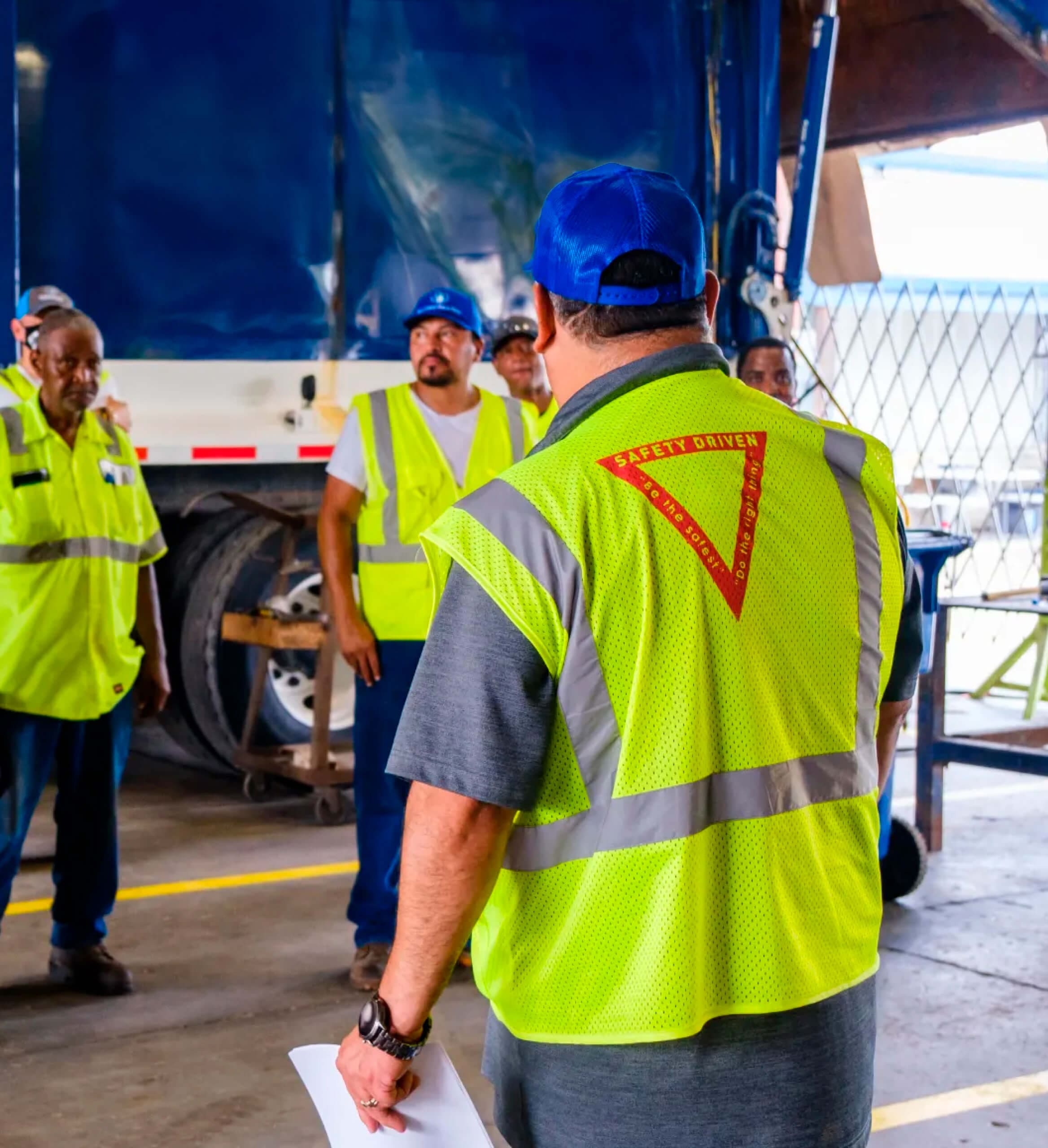
Heart of Florida is honored to employ dozens of local workers, providing job security and significant economic benefit.
HOF provides more than 65 local jobs. As the only Class I landfill in the region, the majority of our contractors are right here in Central Florida.
Heart of Florida adheres to strict permitting processes that are frequently reviewed and renewed. To learn more about these permits and what they allow, please see the codes below.
161263-025-SO-MM - Solid Waste Permit
161263-024-SC-MM - Solid Waste Permit
City of Bushnell Permit - City Solid Waste Construction & Operation Permit
0286227-002-EI - Environmental Resource Permit
0286227-007-EI - Environmental Resource Permit
0286227-008-EI - Environmental Resource Permit
0286227-009-EI - Title V Air Operation Permit
1190053-007-AV - Environmental Resource Permit
1190053-011-AC - Air Construction Permit
0450206-001-UC/5EX - Air Construction Permit
20 011259.004 - Water Use Permit
0390266-002-SO-34 - General Permit for an Indoor Waste Processing Facility